

What Is Music Licensing? A Beginner's Guide for Creators
What Is Music Licensing? A Beginner's Guide for Creators
Music is one of the easiest ways to make a video more engaging. The right track can turn a simple Instagram Reel into a story, make a YouTube vlog more memorable or completely change the mood of a brand video.
But there is an important question creators often overlook:
Do you actually have the right to use that song in your video?
This is where music licensing comes in.
Whether you are an Instagram creator, YouTuber, freelancer, influencer or someone creating content for brands, understanding the basics of music licensing can help you avoid copyright problems and choose music more confidently.
In this guide, we will explain what music licensing means, how music rights work, what creators should know about Instagram and YouTube, and how to find licensed music for your content.
What Is Music Licensing?
Music licensing is the process of getting permission to use copyrighted music for a specific purpose.
When a song is created, different rights can exist around the composition and the recording. Those rights may be owned or controlled by songwriters, composers, publishers, record labels, artists or other rights holders.
A music licence gives you permission to use the music under specific terms.
Those terms can determine things such as:
Where you can use the music
What type of content you can create
Whether the content can be monetised
Whether the content can be used commercially
Which platforms are covered
How long the permission lasts
Which countries or territories are covered, etc.
Why Does Music Licensing Matter for Creators?
For creators, music is often an essential part of the content creation process.
You might use a song in:
An Instagram Reel
A YouTube video
A travel vlog
A fashion video
A podcast
A product video
A sponsored post
A brand campaign
An advertisement
The important part is that the intended use of the music matters.
For example, the rights required for a creator’s personal content can differ from those required when the same music is used in a paid advertisement for a brand.
As your content becomes commercial, understanding music rights becomes increasingly important.
Depending on the platform, rights involved and type of use, using music without the appropriate permission can result in actions such as audio being muted, content being restricted, copyright claims, monetisation issues or even content being taken down.
Copyright and Music: What Does It Actually Mean?
A common misconception is that if a song is available on the internet, it is free to use.
It isn't.
Most commercially released music is protected by copyright.
Think of copyright as a set of rights that allows the owners or rights holders of a creative work to control how that work is used, just like images/videos.
For music, there can be rights associated with both the musical composition and the sound recording.
This is why simply finding a song on a website does not automatically give you permission to use it in your own video.
Can Creators Use Music from Instagram?
This is one of the biggest questions around music licensing for creators.
Instagram provides access to music through its platform, but creators should not assume that every track available through Instagram can automatically be used for every type of content or commercial purpose.
Music availability and permitted uses can depend on factors such as your account, location, the music rights available to Meta and how the content is being used.
This is particularly important when creating:
Sponsored content
Paid partnerships
Brand collaborations
Advertisements
Business content
Promotional videos
What Does Meta Say About Using Music for Commercial Content?
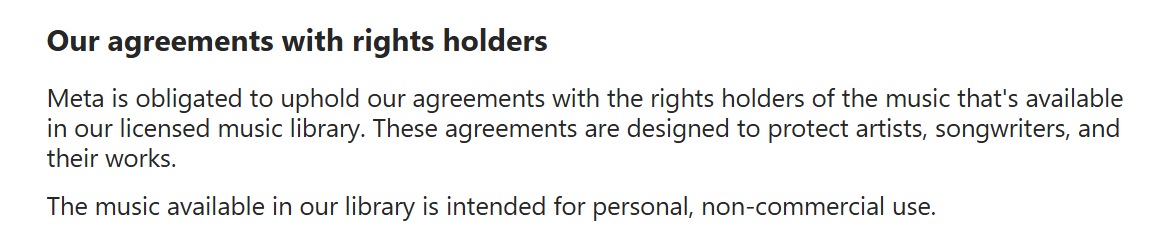
Under Meta's guidelines, it clearly states:
“Use of music for commercial or non-personal purposes in particular is prohibited unless you have obtained appropriate licences. Eligibility for, and participation in, Music Revenue Sharing does not by itself make a video commercial.”
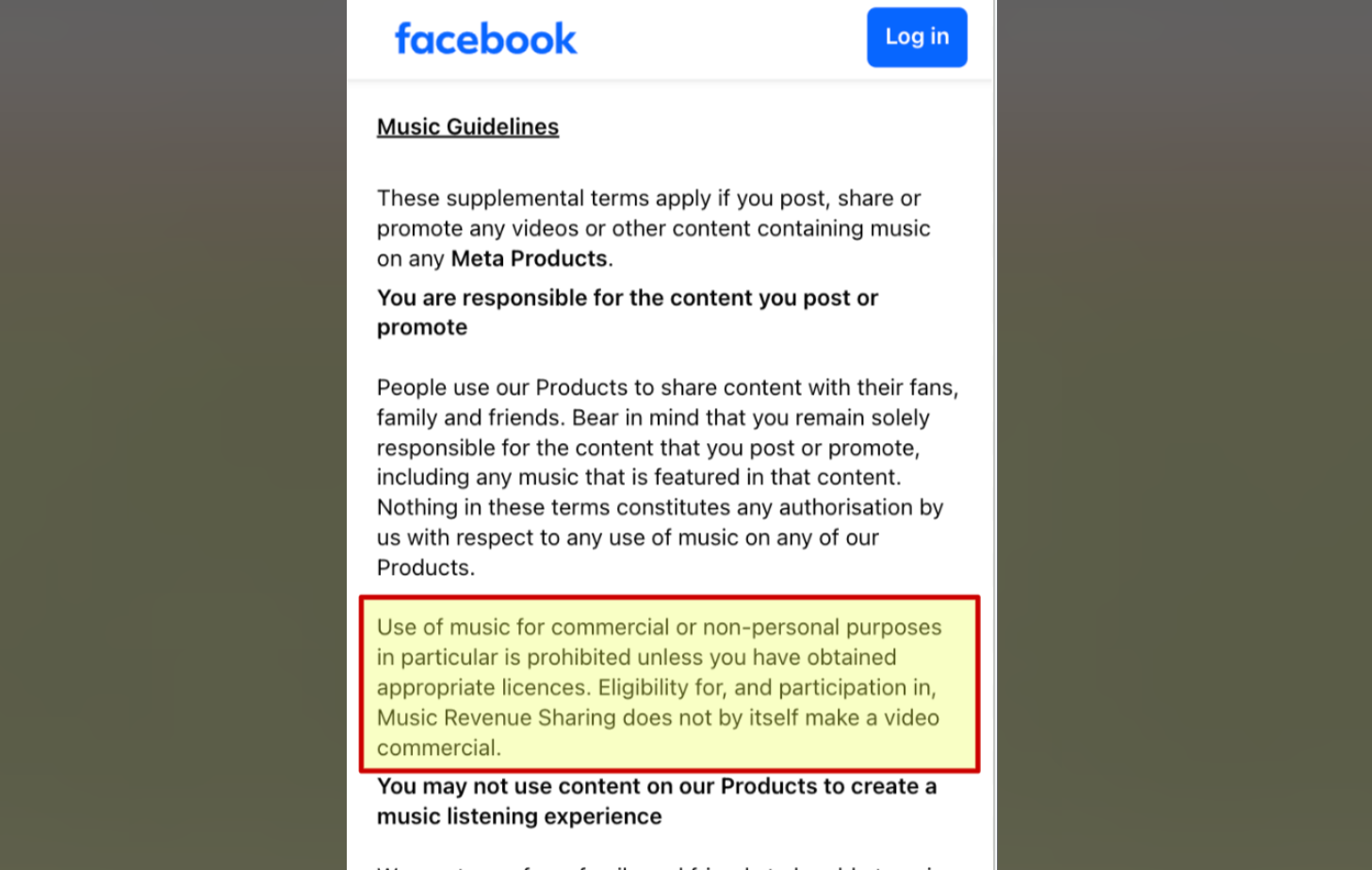
Meta also states:
“The music available in our library is intended for personal, non-commercial use.”
These guidelines highlight an important distinction for creators: music available through Instagram's music library should not automatically be treated as cleared for commercial or branded content.
What about a personal Reel?
Personal content and commercial content can be treated differently under music licences and platform rules.
For example, using music through an authorised in-platform feature for a personal Reel does not necessarily mean that the same music can be downloaded and reused in a brand advertisement.
Can You Use Music on YouTube?
YouTube also has systems that identify copyrighted music in uploaded videos.
When copyrighted music is detected, the rights holder may have policies that affect the video.
Depending on the rights and the rights holder's settings, this can include:
A copyright claim
Revenue being directed to the rights holder
Restrictions on the video
The video being blocked in certain locations
Other copyright-related actions
This is why creators who monetise their YouTube channels or work with brands should pay particular attention to using copyright-safe music.
Personal Content vs Commercial Content
This is one of the most important concepts for creators to understand.
Personal Content
This could include:
A family video
A personal travel Reel
A birthday montage
A personal vlog
Depending on the platform and music source, different permissions may apply.
Commercial Content
Commercial content can include:
Sponsored Reels
Brand collaborations
Product promotions
Advertisements
Business social media posts
Paid campaigns
When a brand, business, product or paid promotion is involved, music rights become especially important.
A song that may work for a personal social media post is not automatically cleared for a commercial campaign. Brands need to obtain proper licenses & permissions before using their songs.
What Does a Music Licence Actually Give You?
A music licence is not necessarily a blanket “permission to use this song anywhere.”
Licences can come with specific conditions.
The exact terms depend on the music provider and the licence purchased.
That is why reading the licence terms matters.
Before using a track, check:
Platform: Where will the content be published?
Purpose: Is it personal, or branded/commercial/advertising content?
Duration: How long does the licence cover your use?
Territory: Where can the content be distributed?
Monetisation: Can the content generate revenue?
What Is Licensed Music?
Licensed music simply means you have obtained permission to use music under defined terms.
For creators, a licensed music library can make the process much easier because instead of contacting individual rights holders for every song, you can discover tracks through a platform that provides licensing options.
The important part is still to understand what your particular licence covers.
How to Legally Use Music in Your Videos
Before publishing a Reel, YouTube video or commercial content, check these five things:
1. Check the Platform
Make sure your music licence covers where you’re publishing — Instagram, YouTube, Facebook, etc.
2. Check the Usage
Is the content personal, sponsored, branded or promotional? Make sure your licence covers that specific use.
3. Read the Licence Terms
Don’t rely only on labels like “licensed” or “royalty-free.” Check what the licence actually permits.
4. Keep Proof of Your Licence
Save your licence, receipt or other relevant licensing information for your records.
5. Check Before Publishing
Confirm your music rights before the content goes live to avoid potential copyright issues later.
How Hoopr Makes Music Licensing Easier for Creators
This is where Hoopr comes in.
Instead of searching the internet for random “copyright-free” music and trying to figure out what you can actually use, or reaching out to individual right holders of songs for permissions, creators can discover music through Hoopr's curated catalogue.
Hoopr offers licensed Indian music across genres, moods and content formats, helping creators find music for the stories they want to tell.
You can explore music for different social media platforms across different genres & moods from different artists.
How Hoopr Helps Keep Your Content Copyright-Safe?
Whitelisting: Hoopr gets your account whitelisted for a specific song, allowing you to use that licensed music in your content without copyright issues.
To learn more about Whitelisting check this blog out: What Is Music Licensing? A Beginner's Guide for Creators.
Process: Submit account/content details → Hoopr whitelists your content → Content is whitelisted → Music can be used as per the approved licence terms.
Final Takeaway
Music licensing is simply about having the appropriate permission to use music for a particular purpose.
The most important thing to remember is that owning, streaming or accessing a song does not automatically mean you have the rights to use it in your own content.
Before using a track, consider where your content will be published, whether it is commercial, what platforms are covered and what your licence actually allows.
Once you understand these basics, choosing music becomes much easier.
Tagged