




Shadow banning on Instagram: Causes, Myths & How to Avoid It
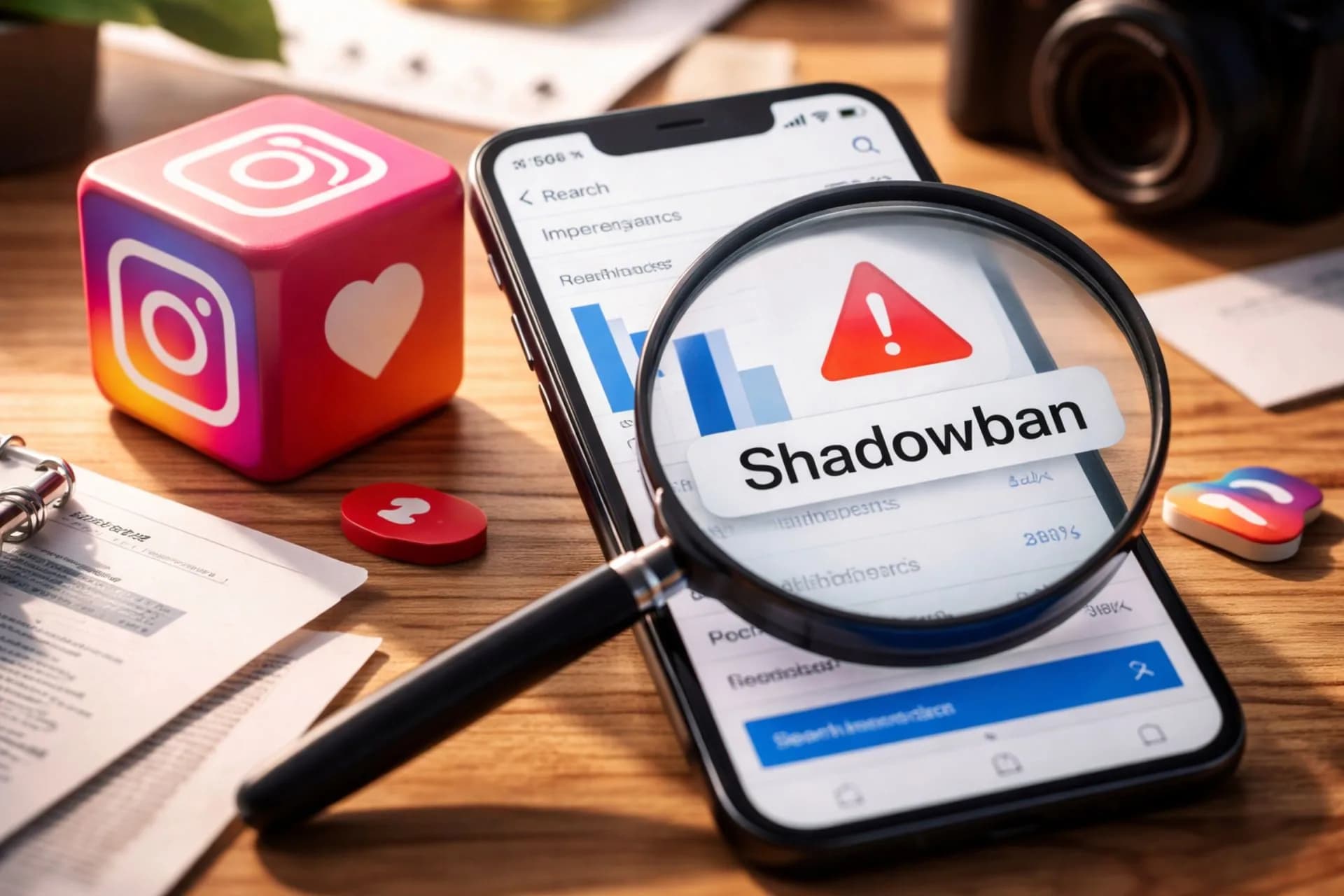
If your Instagram reach suddenly drops, hashtags stop bringing traffic, or your posts no longer appear on Explore, you might wonder: “Am I shadow banned?”
Shadow banning is one of the most talked-about, and misunderstood, topics in social media marketing. Creators, brands, and agencies constantly search for answers about what triggers it, whether it’s real, and how to recover if it happens.
What Is Shadow banning on Instagram?
Shadow banning refers to a situation where Instagram limits the visibility of your content without notifying you directly. Your posts may still appear to followers, but they stop reaching non-followers through hashtags, Explore, or Reels recommendations.
Instagram has never officially used the term “shadowban,” but it does confirm that content violating guidelines, spam-like behavior, or low-quality engagement can reduce distribution.
In simple terms: your account isn’t removed, your reach is quietly restricted.
Signs You Might Be Shadow banned
Here are the most common symptoms:
- Sudden and sharp drop in reach or impressions
- Hashtags bringing little to no traffic
- Posts not appearing under recent hashtags
- Reels performing far worse than usual
- Explore page impressions disappearing
- Engagement only from existing followers
If several of these happen at once, your account may be facing limited distribution.
Common Causes of Instagram Shadow banning
Understanding what triggers reduced visibility is the first step to avoiding it.
1. Using Banned or Broken Hashtags
Some hashtags are restricted due to spam or inappropriate content. Repeatedly using them, even unintentionally, can hurt your reach.
Always check hashtags before posting by searching them directly on Instagram.
2. Violating Community Guidelines
Content involving:
- Hate speech
- Misinformation
- Graphic visuals
- Copyright abuse
- Misleading claims
can trigger suppression or recommendation limits.
3. Bot Activity or Automation Tools
Using third-party tools for:
- Auto-following/unfollowing
- Mass liking
- Comment spam
- Engagement pods
signals inauthentic behavior and can reduce trust in your account.
4. Posting Too Aggressively
Uploading many posts, comments, or DMs in a short time, especially from a new account, can look spammy to Instagram’s systems.
5. Repetitive or Copy-Paste Hashtags
Using the same hashtag set on every post can flag your activity as low-quality or automated.
6. Being Reported Frequently
If users report your content—whether justified or not—Instagram may temporarily limit reach while reviewing your account.
7. Low-Quality Engagement
If people quickly scroll past your posts, mute you, or stop interacting, Instagram may reduce distribution naturally based on performance—not as punishment, but as ranking logic.
Myths About Instagram Shadow banning
Let’s clear up some common misconceptions.
Myth 1: Instagram secretly hates your account
Instagram doesn’t randomly punish creators. Visibility drops usually stem from content performance, policy issues, or suspicious behavior.
Myth 2: Using many hashtags causes a shadow ban
Using up to 30 relevant hashtags is allowed. The problem is irrelevant, spammy, or banned tags, not the number.
Myth 3: Switching to a business account lowers reach
Instagram has stated that account type doesn’t directly limit visibility. Many high-performing creators run business profiles.
Myth 4: Deleting posts fixes everything instantly
Deleting content doesn’t automatically restore reach and may sometimes look suspicious if done repeatedly.
Myth 5: Shadow bans last forever
Most visibility limits are temporary, especially if you correct the issues.
How to Check If You’re Shadow banned
Try these quick tests:
Hashtag Test
Post using a small, niche hashtag and ask someone who doesn’t follow you to search that tag. If your post doesn’t appear in “Recent,” reach may be restricted.
Account Status Tool
Go to Settings → Account → Account Status. Instagram now shows whether your content is eligible for recommendations.
Insights Review
Check reach from non-followers and Explore. A sharp drop is a red flag.
How to Avoid Shadow banning on Instagram
Prevention beats recovery. Here’s what actually works:
✔ Follow Community Guidelines Strictly
Keep content original, respectful, and compliant—especially in sensitive niches.
✔ Stop Using Automation Tools
Stick to organic engagement only.
✔ Rotate Hashtags Thoughtfully
Use a mix of:
- Niche hashtags
- Medium-volume tags
- Broad but relevant ones
And change them regularly.
✔ Slow Down Activity
Avoid mass actions. Spread likes, follows, and comments naturally throughout the day.
✔ Create High-Retention Content
Focus on:
- Strong hooks
- Clear storytelling
- Subtitles
- Clean visuals
The better people engage, the more Instagram pushes your content.
✔ Engage Authentically
Reply to comments, interact with similar creators, and build real community signals.
✔ Use Original Audio & Visuals
Reels with unique edits and voiceovers often perform better than recycled or watermarked clips.
✔ Audit Old Posts
Remove or edit content that might violate guidelines or use risky hashtags.
What to Do If You Think You’re Shadow banned
If reach is already down:
- Stop automation tools immediately
- Check Account Status for violations
- Avoid posting for 24–48 hours to reset activity patterns
- Post high-quality, original content afterward
- Use fresh hashtags
- Encourage saves and shares
- Monitor performance over the next 1–2 weeks
Consistency plus clean behavior usually restores visibility.
Final Thoughts
Shadow banning on Instagram isn’t some mysterious curse, it’s typically the result of guideline violations, spam-like activity, or poor content signals.
Creators who focus on authentic engagement, compliance, and strong content rarely face long-term reach issues.
If you treat Instagram like a community instead of a growth hack machine, the algorithm usually rewards you.